
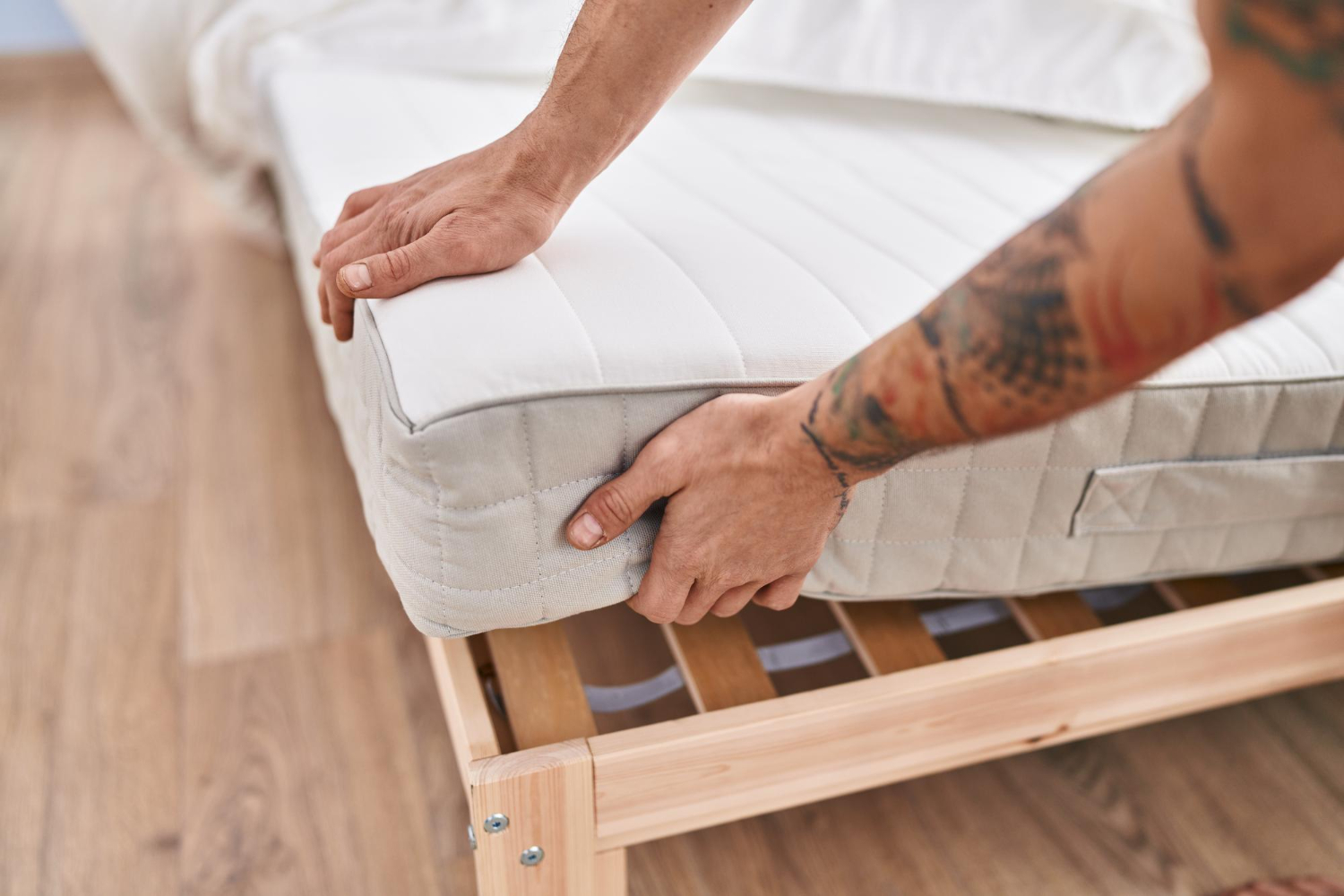
A cheap bed frame doesn’t have to feel temporary. The difference between one that lasts a decade and one that starts creaking in six months usually comes down to a few overlooked details—materials, support design, and how the whole thing is put together.
Here’s how to spot a budget bed frame that actually holds up.
It Starts With the Material (and “cheap” doesn’t mean flimsy)
The biggest myth is that low price automatically equals low durability. In reality, many affordable frames use the same core materials as expensive ones—you just lose some design extras.
Two materials consistently hold up well:
- Steel: Strong, resistant to warping, and often supports high weight without bending
- Solid wood: Especially hardwoods or dense softwoods, which resist cracking better than particleboard
Metal frames, in particular, tend to punch above their price. Even budget versions can support serious weight and resist wear over time . The catch? You want thick steel, not thin tubing that flexes.
Support Matters More Than Style
A bed frame isn’t just a base—it’s structural support for your mattress. And this is where cheaper frames often fail.
Look for:
- Closely spaced slats (ideally 2–4 inches apart)
- Center support bars, especially for queen and king sizes
- Multiple legs (6–9 total) to distribute weight evenly
One of the most common complaints people share online is sagging in the middle—usually caused by weak or missing center support.
“Durability…comes down to material, construction, and design.”
That “design” part is often what separates a good budget buy from a bad one.
Weight Capacity Isn’t Just a Number
A high weight limit is a good sign—but only if it’s backed by solid construction.
Many reliable budget frames now support 1,000+ pounds, and some go far beyond that with reinforced slats and steel structures .
If a frame doesn’t clearly list its weight capacity, that’s usually not a great sign.
Watch for Weak Points (These Are Deal Breakers)
Even a sturdy-looking frame can fail if certain parts are poorly made. Pay attention to:
- Thin slats that can crack or bow
- Plastic connectors or joints that wear out quickly
- Too many bolts (more parts = more chances for loosening and squeaking)
Metal frames can also start making noise over time if bolts loosen—but welded or reinforced designs help reduce that risk .
Platform vs. Box Spring: Choose Simplicity
Platform beds are often the better budget choice because they eliminate the need for a box spring. That means:
- Fewer moving parts
- More stable support
- Lower total cost
Many affordable platform frames now include built-in slats strong enough to support the mattress directly.
Assembly Tells You a Lot About Longevity
If a bed frame is complicated to assemble, it’s often because it relies on lots of smaller connecting parts—which can loosen over time.
Better budget frames usually:
- Use fewer, stronger joints
- Offer tool-free or simple assembly
- Feel solid immediately after setup
If it wobbles even slightly on day one, it won’t improve with time.
If you remember nothing else, focus on this: strong material + solid support system + simple construction. That combination is what keeps a budget bed frame from sagging, wobbling, or falling apart.
You don’t need to spend a fortune—you just need to avoid the shortcuts that cheap frames hide in the fine print.
And if you’re deciding between two similar options? Choose the one that looks a little overbuilt. That’s usually the one still standing a few years from now.