
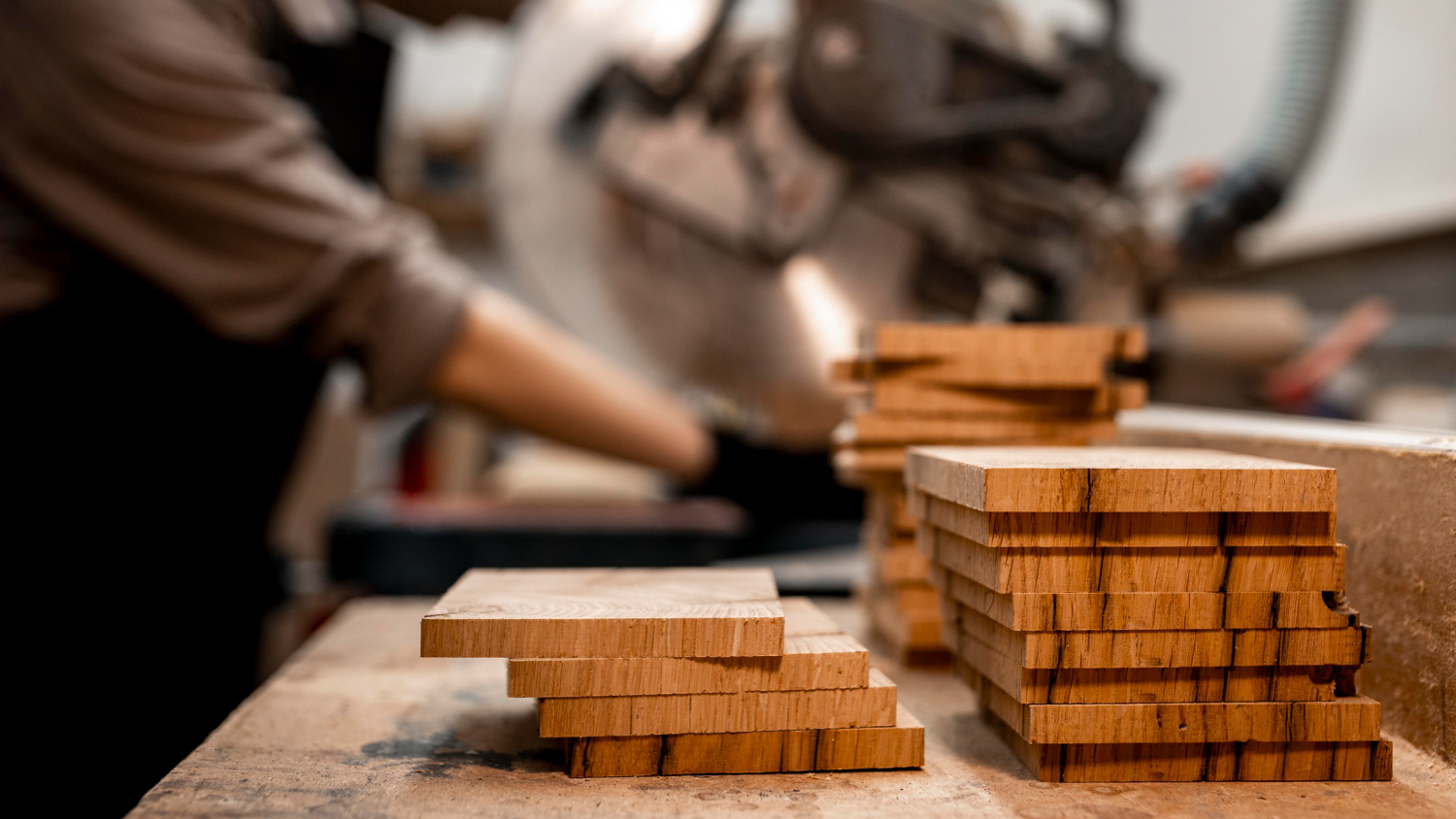
“Engineered wood” sounds like a marketing term—and sometimes, it is. It gets used as a catch-all label that can mean anything from impressively durable to disappointingly flimsy. That ambiguity is what makes shopping for furniture in this category tricky. Not all engineered wood is created equal, and the difference between a piece that lasts years and one that fails quickly often comes down to details you won’t see in a product photo.
Understanding what’s actually behind the label makes it much easier to separate smart buys from short-lived ones.
What “Engineered Wood” Really Means
At its core, engineered wood is any wood product that’s been manufactured by binding together fibers, veneers, or strands with adhesives. That includes materials like plywood, MDF (medium-density fiberboard), and particleboard. They’re designed to be more uniform than solid wood, often more affordable, and sometimes more stable depending on how they’re made.
The problem is that retailers don’t always specify which type they’re using. A listing might simply say “engineered wood,” leaving you to guess whether you’re getting high-quality plywood or low-density particleboard.
The Good: When It’s Done Right
Not all engineered wood deserves skepticism. Plywood, for example, is widely respected for its strength. It’s made by layering thin sheets of wood with the grain alternating in each layer, which creates a material that resists warping and cracking. High-quality plywood furniture can be incredibly durable and is often used in cabinetry and well-made shelving.
MDF also has its place. It’s smooth, consistent, and resistant to splitting, which makes it ideal for painted finishes and detailed designs. When it’s thick and properly supported, MDF can feel solid and substantial.
In many cases, engineered wood actually performs better than solid wood in certain environments. It’s less prone to expanding and contracting with humidity, which can reduce the risk of warping or cracking over time.
The Bad: Where It Falls Short
The downsides show up when cost-cutting takes priority over construction. Particleboard is the most common weak link. It’s made from compressed wood chips and resin, and while it’s cheap to produce, it doesn’t hold up well under stress. It can sag under weight, chip at the edges, and swell if exposed to moisture.
Another issue is thinness. Even decent materials become unreliable when they’re used in overly thin panels. A bookshelf made from thin MDF or particleboard will struggle to support heavy items, no matter how nice the finish looks.
Then there’s the hardware problem. Engineered wood doesn’t grip screws as well as solid wood, especially after repeated assembly or movement. If the connections are poorly designed, joints can loosen over time, leading to wobbling or instability.
Veneers: The Illusion of Solid Wood
Many engineered wood pieces are finished with a veneer—a thin layer of real wood applied to the surface. This can look great and give the appearance of solid wood at a lower cost. But veneers come with their own trade-offs.
A well-applied veneer on a strong core (like plywood) can be a great combination. But when a thin veneer is applied over low-quality particleboard, it’s mostly cosmetic. Once the surface chips or peels, there’s no hiding what’s underneath.
Weight and Feel: Quick Clues to Quality
You don’t need to be an expert to spot better engineered wood furniture. Weight is one of the simplest indicators. Heavier pieces tend to use denser materials and thicker panels. If something feels unusually light for its size, that’s often a sign of lower-quality construction.
Edges and finishes also tell a story. Clean, sealed edges and smooth surfaces suggest more careful manufacturing. Rough seams, visible chips, or peeling laminate are early warning signs.
Where Engineered Wood Makes Sense
Engineered wood furniture can be a smart choice in a lot of situations. It’s often more affordable, easier to move, and available in a wider range of finishes than solid wood. For items like TV stands, desks, and decorative shelving, it can offer great value—if you choose well.
It’s also a practical option for environments where temperature and humidity fluctuate. Unlike solid wood, which can expand and contract noticeably, engineered wood tends to stay more stable.
Where to Be More Selective
For heavy-use or load-bearing pieces—like bookshelves, bed frames, or large dining tables—it pays to be more selective. This is where construction quality really matters. Thicker panels, reinforced joints, and higher-grade materials make a noticeable difference in how the piece performs over time.
If a piece will carry weight or see daily wear, it’s worth looking beyond the label and digging into the details.
“Engineered wood” isn’t inherently good or bad—it’s a category, not a verdict.
Within it, there’s a wide spectrum of quality. The key is understanding what you’re actually buying and how it’s built.
When done well, engineered wood furniture can be durable, stable, and a smart use of your budget. When done poorly, it’s the reason so many pieces end up sagging, peeling, or wobbling within a year.
The label alone doesn’t tell you much. The construction tells you everything.