
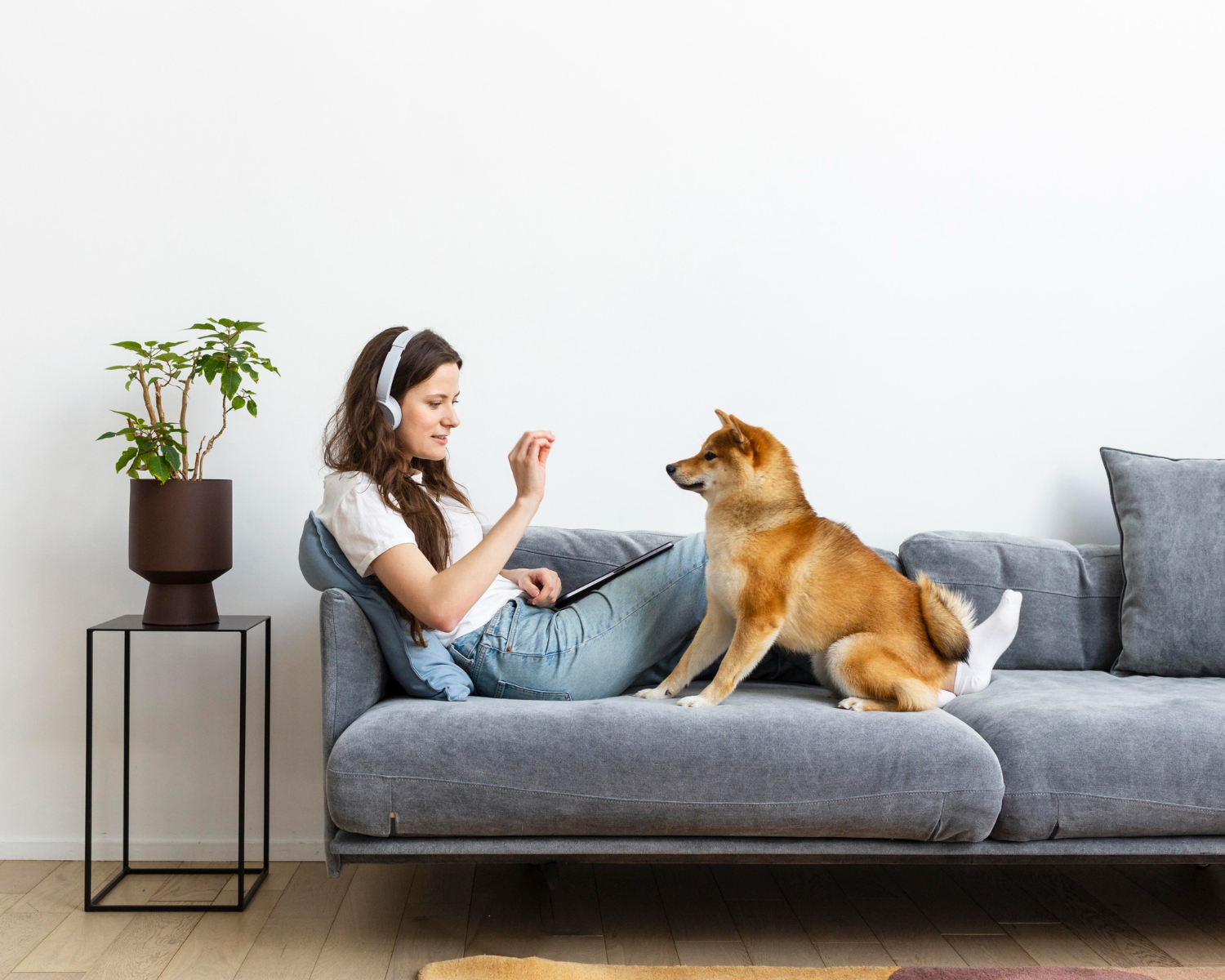
If you live with pets, you already know furniture doesn’t fail because it looks outdated—it fails because it can’t handle claws, shedding, jumping, scratching, and the occasional “that wasn’t supposed to be a bed” moment.
The goal isn’t perfection. It’s choosing materials that can take a hit and still function.
Leather (Best Overall for Durability and Easy Cleaning)
Leather is one of the most reliable options for pet households because it doesn’t behave like fabric. It doesn’t weave, snag easily, or trap hair in the same way.
Why it works:
- Claws are less likely to penetrate the surface
- Pet hair wipes off easily
- Spills stay on the surface instead of soaking in
- Can last many years with basic care
Higher-quality finished leather tends to wear in rather than wear out, developing a patina instead of falling apart.
Trade-offs:
- Can scratch, especially with cats
- Higher upfront cost
- Needs occasional conditioning to prevent drying
Best for homes with dogs or low-maintenance cleaning preferences.
Performance Fabrics (Best Fabric Option Overall)
Performance fabrics are engineered specifically for durability, making them one of the most practical choices for pet owners.
Why it works:
- Designed for heavy daily use
- Resistant to stains and moisture
- Tight weave helps prevent claw damage
- Holds up well under repeated wear
These fabrics are commonly used in modern furniture because they balance comfort and durability better than standard upholstery.
Trade-offs:
- Quality varies widely between brands
- More expensive than basic upholstery
Best for households that want fabric comfort without constant upkeep.
Microfiber / Microsuede (Best Budget-Friendly Option)
Microfiber is a popular choice for pet owners because it’s dense, affordable, and surprisingly resistant to damage.
Why it works:
- Very tight weave resists claw snags
- Pet hair stays on the surface and is easy to remove
- Good resistance to everyday stains
- Soft and comfortable to use
The dense structure makes it harder for claws to catch or pull threads.
Trade-offs:
- Can attract lint and dust
- May show pressure marks over time
- Less premium feel than leather or performance fabrics
Best for budget sofas and high-use living areas.
Olefin (Underrated Durable Synthetic)
Olefin is often used in outdoor furniture, but it also performs well indoors in pet-friendly homes.
Why it works:
- Naturally resistant to stains and moisture
- Holds color well in sunlight
- Strong resistance to abrasion
- Doesn’t absorb odors easily
Trade-offs:
- Can feel less soft than other fabrics
- Less common in higher-end furniture designs
Best for bright rooms or spill-prone spaces.
Canvas and Tight Cotton Blends (Decent Natural Option)
These materials sit in the middle—more natural in feel but still reasonably durable if tightly woven.
Why it works:
- Strong, dense weave helps resist tearing
- Breathable and comfortable
- Often used in removable slipcovers
Trade-offs:
- Absorbs stains more easily than synthetics
- Requires more frequent cleaning
- Not ideal for heavy shedders or active pets
Best for casual, washable furniture setups.
Materials to Avoid With Pets
Some fabrics simply don’t hold up well in pet households, regardless of appearance.
Avoid:
- Linen, which snags easily and stains quickly
- Standard velvet, which shows wear and claw marks
- Loose or open weaves, which catch claws and unravel
- Silk or delicate decorative fabrics, which are not meant for daily use
In general, anything soft, loose, or highly textured is more vulnerable to damage.
Simple Durability Ranking
From most to least pet-resistant:
- Leather
- Performance fabrics
- Microfiber
- Olefin
- Canvas or tight cotton blends
- Linen, velvet, and delicate fabrics
The Real Rule That Matters
Material performance comes down to a few basics:
- Tight weaves resist claws
- Smooth surfaces are easier to clean
- Synthetic fibers usually handle stains better than natural ones
If a fabric feels loose or delicate, pets will expose that weakness quickly.
Pet-friendly furniture isn’t about finding something indestructible.
It’s about choosing materials that can handle predictable damage without falling apart.
Leather and performance fabrics offer the best long-term reliability. Microfiber is the strongest budget option. Natural fabrics can work, but only in lower-traffic or more controlled environments.
In homes with pets, durability isn’t a luxury feature—it’s the baseline requirement.