
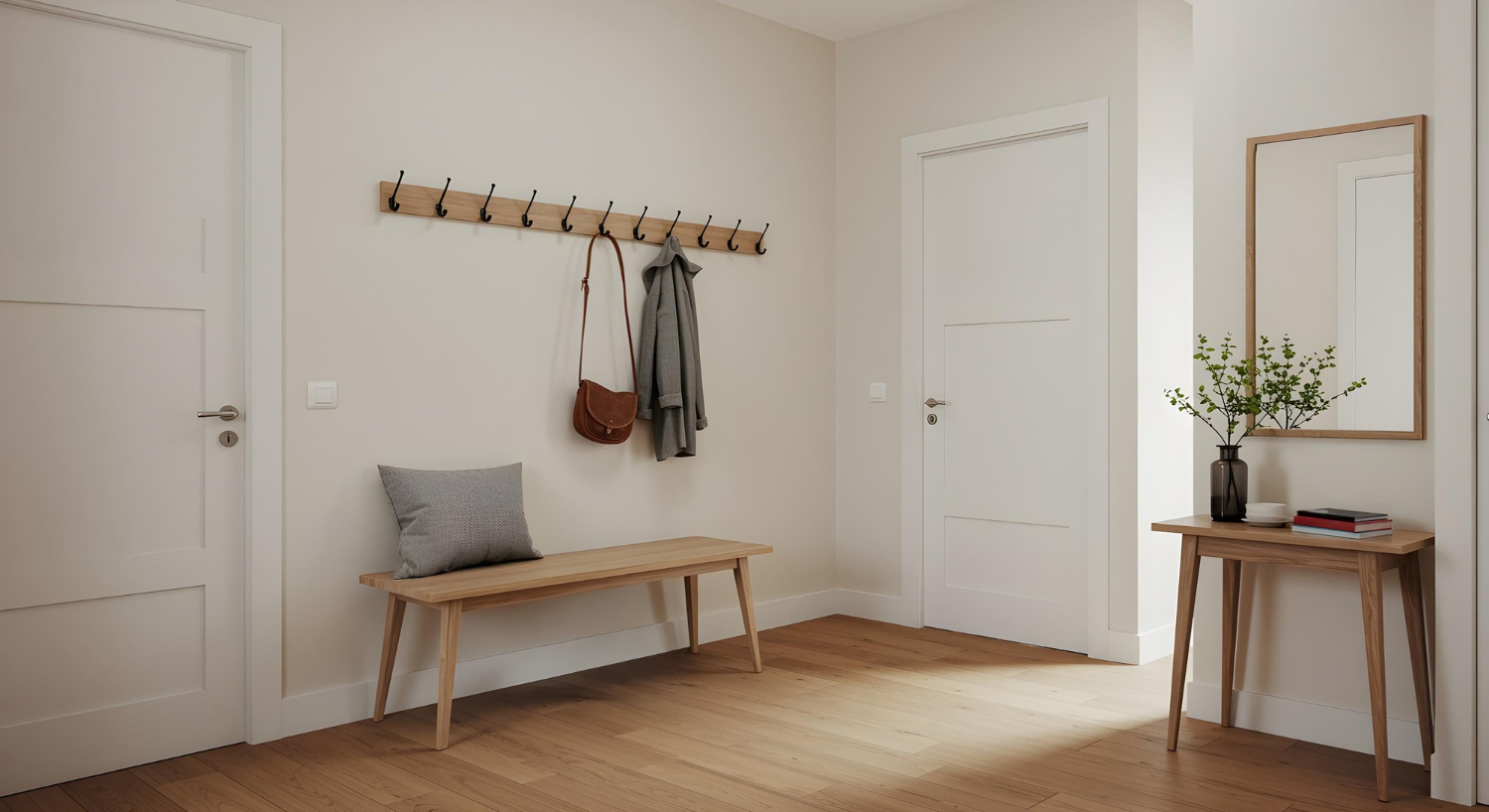
A small entryway is one of the easiest places in a home to get cluttered. Shoes pile up, keys disappear, bags get dropped “just for a second,” and suddenly the first thing you see when you walk in is chaos. The solution isn’t more space—it’s smarter furniture that controls how items enter and leave the home.
Good entryway design always comes down to three things: contain shoes, manage daily drop-offs, and use vertical space.
Start With a Simple Entryway System
Before buying anything, it helps to think in zones:
- Hang zone: coats, bags, keys
- Shoe zone: contained storage (not floor piles)
- Drop zone: small surface for mail, wallet, everyday items
Even in very small apartments, this structure alone can eliminate most clutter.
1. Shoe Storage That Actually Works
Shoes are usually the biggest source of entryway mess.
Best compact options:
- Slim shoe cabinets
- Shoe benches with hidden compartments
- Stackable or vertical shoe racks
- Under-bench shoe storage
Closed or semi-closed storage is especially effective because it hides visual clutter and keeps dust down.
If space is extremely tight, even a narrow wall shoe rack can work—as long as it keeps shoes off the floor.
2. Entryway Benches (The Most Practical Furniture Piece)
A storage bench is one of the highest-value pieces for small entryways because it does three jobs at once:
- Seating for putting on shoes
- Hidden storage underneath
- Visual anchor that organizes the space
Benches with cubbies or lift-top storage are especially useful in apartments where every inch matters.
If you only buy one piece of entryway furniture, this is usually it.
3. Wall Hooks Instead of Bulky Coat Racks
Freestanding coat trees look nice but take up floor space quickly. Wall-mounted hooks are more efficient.
They can be used for:
- Coats
- Bags
- Hats
- Dog leashes
- Everyday carry items
Spacing hooks out by person or purpose helps prevent overcrowding and keeps things visually clean.
4. Slim Console Tables for “Drop Zone” Storage
A narrow console table (or floating shelf) gives you a landing spot for daily essentials:
- Keys
- Wallet
- Sunglasses
In small spaces, shallow designs are key—anything too deep will block walkways or make the entry feel cramped.
A mirror above it also helps visually expand the space while making last-minute checks easier.
5. Vertical Storage Makes the Biggest Difference
When floor space is limited, walls become your storage system.
Smart vertical solutions include:
- Floating shelves above eye level
- Peg rails for flexible hooks
- Tall, narrow storage units
- Over-door organizers
Using vertical space prevents clutter from spreading across the floor and keeps the entryway usable.
6. Hidden Storage for Visual Calm
Small entryways feel bigger when clutter is hidden.
Good hidden storage options:
- Closed shoe cabinets
- Baskets inside benches
- Covered bins for seasonal items
- Multi-compartment storage furniture
The goal is simple: reduce “visual noise” so the space feels open, not crowded.
Common Mistakes That Make Entryways Worse
Even good furniture can fail if the layout is off.
Avoid:
- Overloading hooks (creates visual clutter fast)
- Oversized furniture that blocks door swing
- Too many small pieces instead of one organized system
- Leaving shoes on the floor “temporarily”
In small entryways, clutter control matters more than décor.
A Simple Setup That Works in Almost Any Small Entryway
If you want a minimal, functional layout:
- 1 storage bench (shoe + seating)
- 3–5 wall hooks
- 1 narrow shelf or console
- 1 small basket for loose items
That alone covers most daily needs without overcrowding the space.
A well-organized entryway isn’t about having more furniture—it’s about having the right pieces doing multiple jobs at once.
- Use benches to combine seating + storage
- Use wall hooks instead of bulky racks
- Keep shoes contained, not scattered
- Add a small drop zone for daily essentials
When every item has a defined place before you even step into the home, the entryway stops being a clutter zone and starts working like a functional transition space.