
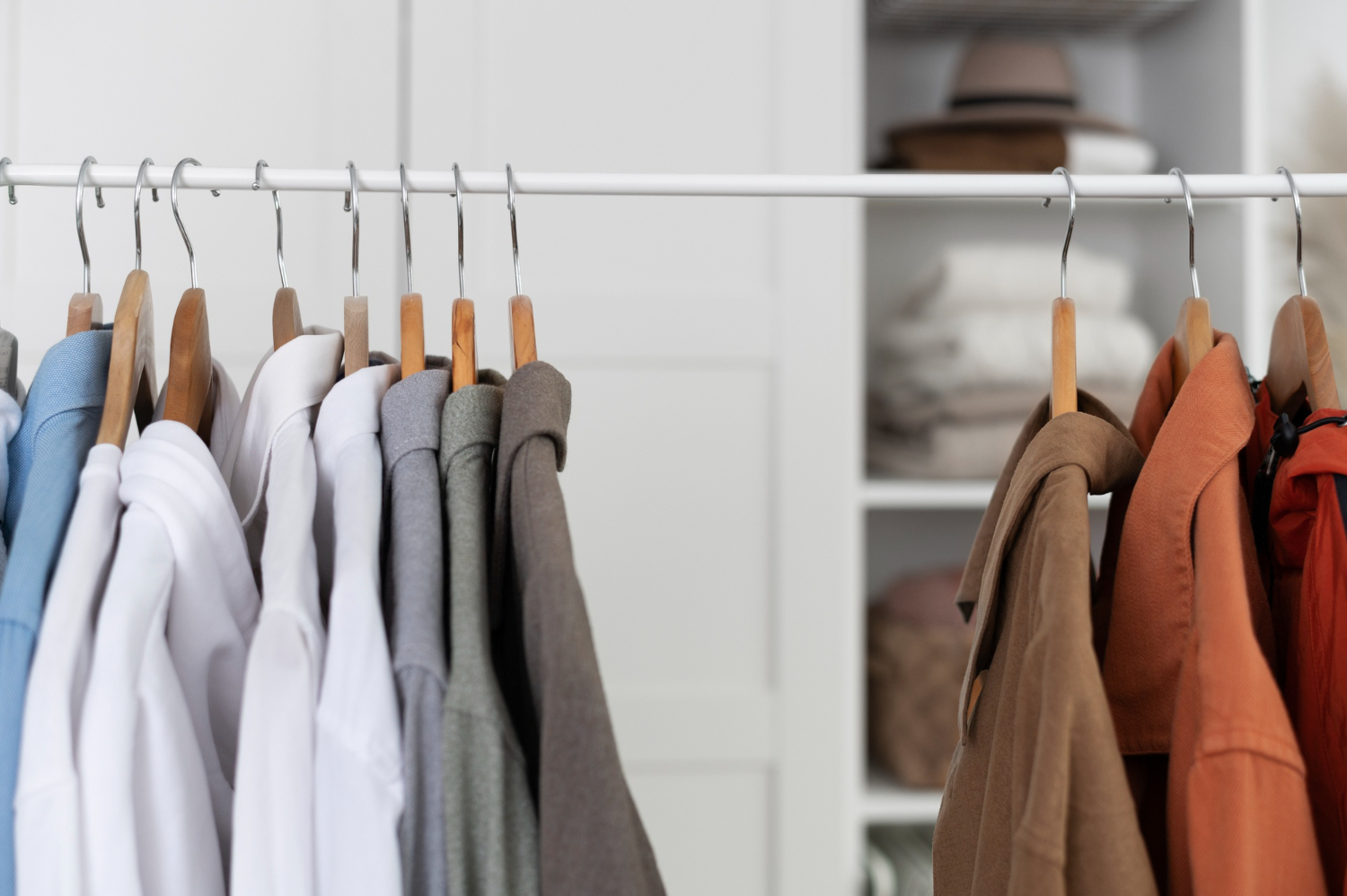
Closet organization on a budget doesn’t require a full system install or matching designer bins. Most small closets can be dramatically improved with a few simple, low-cost upgrades and a bit of structure. The goal is not perfection—it’s making your space easier to use every day.
Here’s how to build a functional, organized closet without spending much.
Start With a Hard Edit (This Saves the Most Money)
Before buying anything, reduce what you actually store.
A cluttered closet can’t be fixed with bins alone. Take everything out and sort it into three groups:
- Keep
- Donate
- Store elsewhere (seasonal or rarely used items)
Most budget-friendly organization systems work better only after this step. Less stuff means less storage needed.
Use Vertical Space First
Closets are usually underused vertically.
Simple upgrades that cost very little:
- Add a second hanging rod below the main one
- Use shelf risers to create stacked storage zones
- Install tension rods for flexible hanging sections
These small changes can effectively double usable space without permanent installation.
Cheap Storage That Actually Works
You don’t need matching systems—just consistent containers.
Good low-cost options:
- Fabric bins for shelves
- Plastic crates or stackable boxes
- Simple baskets for grab-and-go items
Consistency matters more than appearance. Mixed container sizes are what usually make closets feel chaotic.
Over-the-Door Space Is Underrated
The back of the closet door is prime storage real estate.
You can use it for:
- Shoes
- Accessories
- Bags
- Everyday essentials
Over-the-door hooks or hanging organizers are one of the easiest ways to add storage without drilling or remodeling.
Slim Hangers Make a Bigger Difference Than You Think
Switching to uniform slim hangers creates more space instantly and makes the closet feel visually calmer.
Velvet or plastic slim hangers also prevent clothes from slipping and help everything hang at a consistent height, which improves usability.
DIY Dividers Beat Expensive Systems
You don’t need custom shelving systems to separate categories.
Low-cost alternatives:
- Bookends as shelf dividers
- Small boxes or bins as section separators
- DIY cardboard dividers for drawers
These keep stacks from collapsing and prevent “clothing piles” from forming over time.
Zone Your Closet (This Is the Real Game-Changer)
Instead of randomly placing items, assign zones:
- Top shelf: rarely used items
- Eye level: daily wear
- Lower area: shoes or bins
- Door area: quick-access items
This reduces visual clutter and makes it easier to maintain over time.
Rotate Seasonal Clothing
One of the most effective budget strategies is simply storing off-season clothes elsewhere.
Use bins under the bed, suitcases, or top shelves for items you don’t need right now. This instantly frees up space and reduces decision fatigue when getting dressed. ()
Don’t Overbuy “Systems”
The biggest mistake is spending money on full closet systems before understanding your needs.
Most small closets can be organized for under a few hundred dollars using basic rods, bins, and DIY solutions.
Start simple. Upgrade only where you notice real problems.
A budget closet system isn’t about matching aesthetics—it’s about function.
If everything has a place, can be reached easily, and doesn’t collapse into piles, your closet is working. The cheapest solutions are often the most effective because they force you to focus on structure instead of over-designing the space.
Good organization is less about what you buy and more about what you remove, simplify, and keep consistent.