
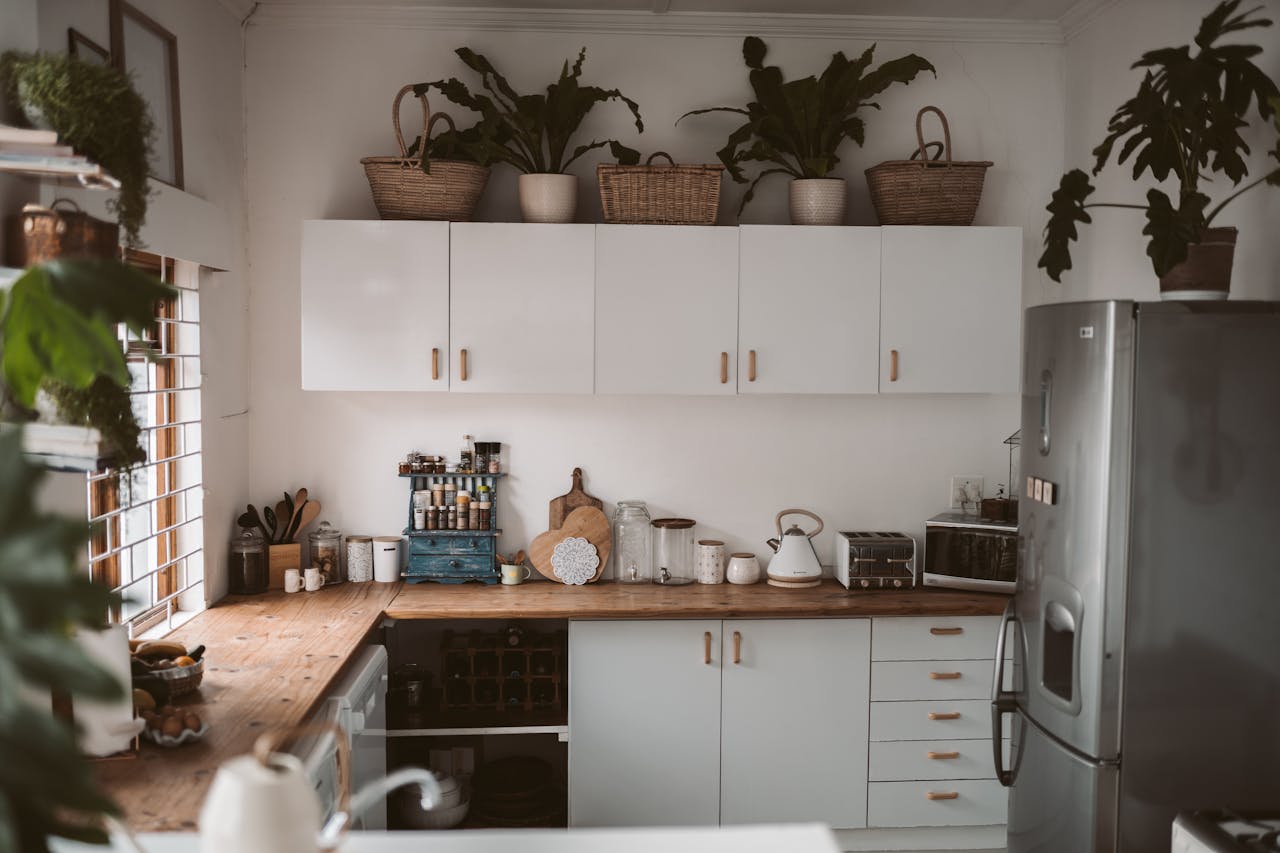
Tiny kitchens can feel limiting until you realize most of the space is already there—you just aren’t using it well. The real difference isn’t more cabinets or bigger counters. It’s smarter use of walls, corners, vertical space, and multi-purpose tools.
Here are small kitchen space savers that actually make a noticeable difference in everyday use.
Use Vertical Space Like It’s Valuable Real Estate
Most small kitchens waste the easiest storage: walls.
Adding floating shelves, wall hooks, or pegboards instantly clears counters and drawers. You can hang utensils, store spices, or keep everyday tools within reach without cluttering your workspace.
Even the inside of cabinet doors can hold hooks or slim organizers for small items.
Shelf Risers Double Your Cabinet Space
One of the simplest upgrades is stacking space inside cabinets.
Shelf risers let you create a second layer so plates, bowls, or pantry items don’t pile on top of each other. It sounds minor, but it effectively doubles usable shelf space without any installation.
This is one of those changes that makes a kitchen feel “bigger” without actually changing anything structural.
Magnetic Strips Free Up Countertops
Knife blocks, utensil jars, and bulky holders take up more space than people realize.
A magnetic strip on the wall moves knives completely off the counter and keeps them easy to access. The same idea works for metal utensils or spice containers with magnetic backing.
It’s a small shift that clears surprisingly large amounts of prep space.
Rolling Carts Add Flexible Storage
A narrow rolling cart works like a mobile cabinet.
Use it for pantry items, snacks, or cookware, then tuck it into a gap when you’re done. It can also act as extra prep space when needed, which is especially useful in kitchens without islands.
This kind of flexibility matters more than fixed storage in tight layouts.
Over-the-Door Organizers Use Dead Space
The backs of cabinet or pantry doors are often completely unused.
Hanging organizers can hold spices, wraps, cleaning supplies, or small kitchen tools. It’s one of the easiest ways to add storage without drilling or remodeling.
In small kitchens, this “hidden space” often becomes essential.
Stackable Containers Reduce Visual Chaos
Bulky packaging wastes space and creates clutter.
Switching to stackable, uniform containers helps you use shelf height more efficiently while also making everything easier to find. Clear containers also reduce the feeling of chaos in tight spaces.
It’s less about aesthetics and more about control over space.
Under-Sink Space Needs Structure
The cabinet under the sink usually becomes a mess of bottles and bags.
A simple tension rod can hang spray bottles, while bins or small drawers organize everything else. This keeps the bottom area usable instead of wasted.
It’s one of the fastest ways to “recover” hidden storage.
Use Foldable or Multi-Use Furniture
In very small kitchens, furniture has to do more than one job.
Fold-down tables, cutting boards that fit over sinks, or nesting bowls reduce the number of items you need overall. The less duplication you have, the easier it is to keep the space organized.
Keep Counters Clear on Purpose
Counter space is your most valuable working area.
The more you store there, the smaller your kitchen feels. Ideally, only keep items you use daily—like a kettle or coffee setup—visible.
Everything else should have a designated hidden or vertical storage spot.
Tiny kitchens don’t become functional by adding more storage—they become functional by using space more intentionally.
Vertical storage, flexible tools, and simple organization systems make a much bigger difference than expensive renovations. Once everything has a place that actually fits how you use it, even a small kitchen starts to feel easy to work in instead of crowded.